Where the Rivers Roar — The High Valleys of Uttarakhand
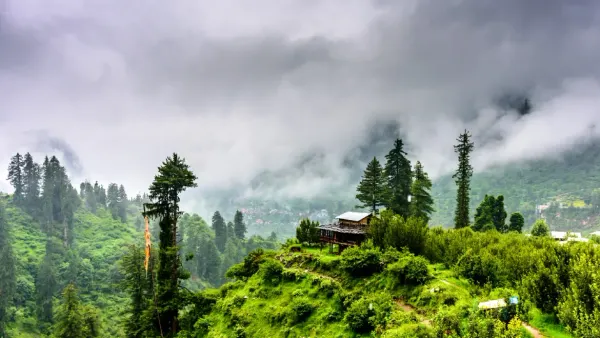
This journey follows Uttarakhand’s sacred rivers through roaring valleys, ancient confluences, and high Himalayan settlements shaped by water and faith. From Devprayag and the Prayags to the remote beauty of Harsil Valley, the mountains here speak in the sound of rivers.
As the road winds deeper into the heart of the Garhwal Himalayas, the silence of the lowlands is replaced by a low, rhythmic thrum. It is the sound of moving water that defines life in the high valleys of Uttarakhand.
The Fragrant Stillness of Harsil
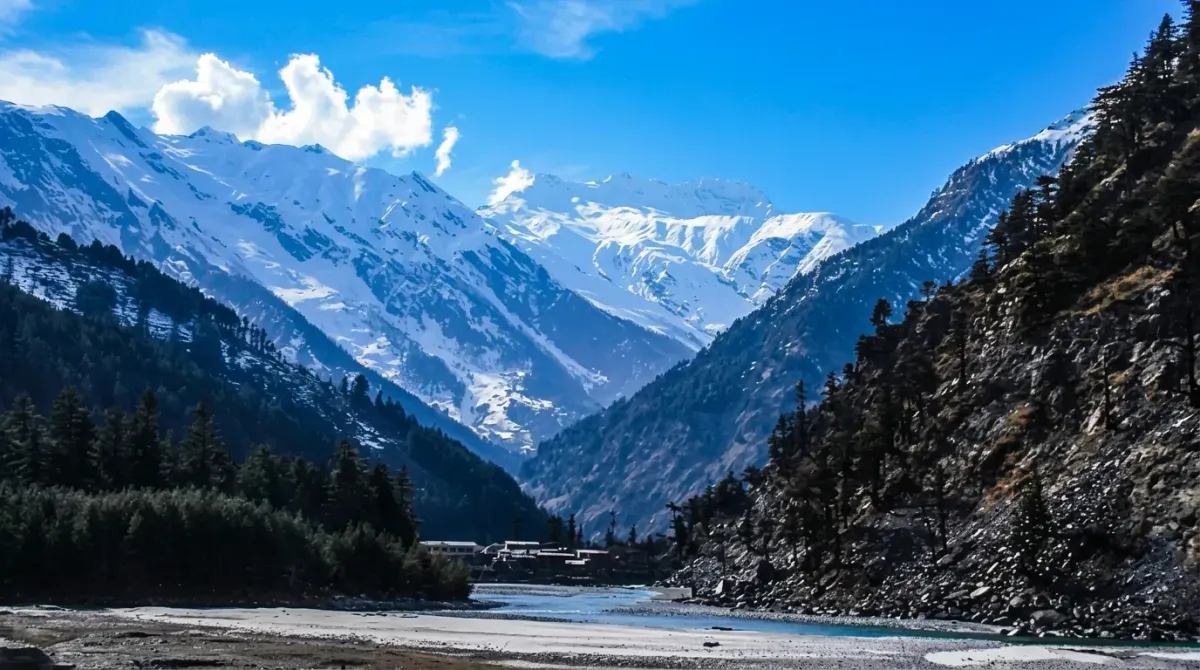
In the Harsil Valley, the Bhagirathi River is a silver ribbon cutting through a landscape of staggering verticality. Here, the world feels painted in shades of deep emerald and frost-white. The valley floor is a patchwork of ancient apple orchards, where the heavy branches bow under the weight of ripening fruit. To walk through Harsil is to move through a cloud of fragrance; the sweetness of the apples mingles with the pungent, comforting scent of woodsmoke drifting from the chimneys of traditional deodar-wood houses.
The architecture here is a testament to time, with intricate carvings and slate roofs that glisten after a light mountain drizzle. Further up the winding road lies Gangotri, where the granite cliffs rise like jagged teeth against a cerulean sky. The river here is no longer a gentle stream but a churning, frothing force of nature. The air is thinner, colder, and vibrates with the echoes of temple bells and the unrelenting thunder of the water hitting the rocks. It is a place where the spray of the glacier-fed river stings the skin, a bracing reminder of the wildness of the high altitude.
The Meeting of the Waters at Devprayag

Descending toward the Devprayag Base, the geography shifts from the rugged seclusion of the high peaks to the dramatic theatre of the confluences. At Devprayag, the eyes are immediately drawn to the Sangam—the precise point where the Alaknanda and the Bhagirathi collide. The visual contrast is startling: the Alaknanda flows with a deep, steady turquoise hue, calm and ancient, while the Bhagirathi rushes in with a turbulent, muddy energy.
Standing on the stone steps of the ghats, one feels the temperature drop as the two giants merge. The sound is an immersive wall of white noise, drowning out the chatter of the town above. The scent here is different from Harsil; it is the smell of wet stone, incense, and the raw, mineral tang of the Himalayas being washed downstream.
The Rhythm of the Prayags
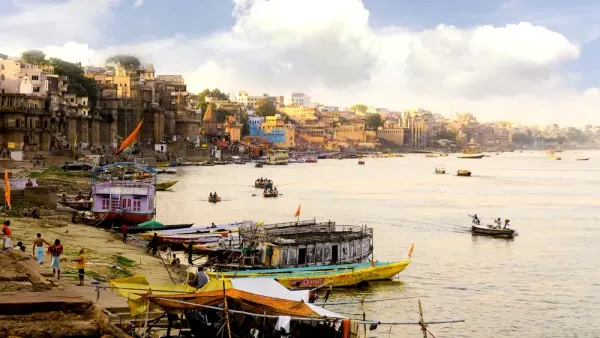
Moving through the string of riverside towns—Srinagar, Rudraprayag, and Karnaprayag—the journey becomes a study in the varying moods of the Alaknanda. Each Prayag has its own temperament. In Srinagar, the valley widens, and the river sprawls out, reflecting the golden light of the afternoon sun across its vast surface. It is a place of warmth and movement, where the valley floor hums with the daily rhythms of mountain life.

As the path climbs toward Rudraprayag and Karnaprayag, the mountains tighten their grip once more. At Rudraprayag, the Mandakini joins the Alaknanda amidst steep cliffs that seem to trap the sound of the water, amplifying every splash against the jagged rocks. In Karnaprayag, where the Pindar River meets the Alaknanda, the water takes on a milky, glacial quality. The sight of these rivers joining is a recurring miracle of the landscape—a constant, churning evolution of water and stone that has carved these valleys over millennia.
A Night in the Shadows of the Peaks
As the sun dips behind the ridges, the valleys transform. The turquoise water turns to ink, and the white peaks catch the final, bruised purples of the sunset. Resting in these high valleys is best experienced in a riverside guest house or a traditional homestay tucked away in the apple orchards of Harsil. Simple retreats such as The Harsil Retreat or the Shivanandi River Lodge in Rudraprayag offer a sanctuary where the only sound is the distant, muffled growl of the river.
The evening meal is a sensory map of the terrain. A plate of steaming red rice serves as the base for Gahat ki Dal, a dark, earthy lentil soup cooked in iron vessels. The highlight is the Bhang ki Chutney, a nutty, aromatic condiment made from hemp seeds that provides a sharp, citrusy kick to the palate. For dessert, there is the iconic Bal Mithai—a dark, roasted milk fudge coated in tiny white sugar balls, tasting of caramelized cream and wood-fired ovens. To eat these dishes by the glow of a small fire, with the mountain chill pressing against the windows, is to truly understand the soul of the high valleys.
If You’re Heading This Way
- Staying in Harsil →
- Exploring Devprayag →
- A Guide to the Prayags →
Uttarakhand Series
- Part I — The First Pine — Where the Hills Begin
- Part II — Where the Rivers Roar — The High Valleys
- Part III — The Quiet Ridges — Meadows, Forests, and Open Skies