The First Pine — Where the Hills Begin
Where the plains begin to rise into forested hills, Uttarakhand opens softly — through Dehradun’s old-world calm, Chakrata’s quiet ridges, and the first glimpses of Kumaon. From colonial echoes to pine-scented roads and slow mountain towns, this is the gentle doorway into the Himalayas.
Exploring Uttarakhand | Part I
The transition is never a single moment, but a blurring of lines. It begins somewhere on the outskirts of the dusty plains, where the horizon stops being a flat, shimmering haze and starts to ripple. The air, once heavy with the exhaust of the lowlands and the scent of parched earth, suddenly thins.
Then comes the first pine—the Chir Pine, with its long, weeping needles and jagged silhouette—standing like a sentry at the foot of the climb. To see it is to know that the threshold has been crossed. This is where most journeys into Uttarakhand begin.
The Dehradun Gateway: Mist and Colonial Echoes
Rising from the lush Doon Valley, the ascent toward Mussoorie is a dramatic shift in perspective. As the road coils upward through the hairpin bends of Barlowganj, the temperature drops in perceptible notches. In the "Queen of Hills," the atmosphere is one of perpetual motion and shifting light. The Mall Road often disappears into a thick, swirling mist that the locals call "the crawl," leaving only the glowing yellow windows of old cafes visible.
Above the bustle lies Landour, a sanctuary of silence where the world slows to the rhythm of a walking stick on stone. Here, the air doesn't just feel cooler; it smells different—a heady mix of damp moss, old oak, and the faint, sweet scent of woodsmoke from a kitchen hearth. In the quiet corners of Char Dukan, one might find a plate of cinnamon-dusted pancakes or a thick cheese omelette, legacy recipes that have warmed travelers for generations. It is a place for long afternoons spent watching the "Winter Line"—that rare, false horizon of orange and mauve that appears over the valley at sunset.
If you’re staying here, the quieter side of Landour is where the town reveals itself.
The High Ridge: Shadows and Earthy Harbours
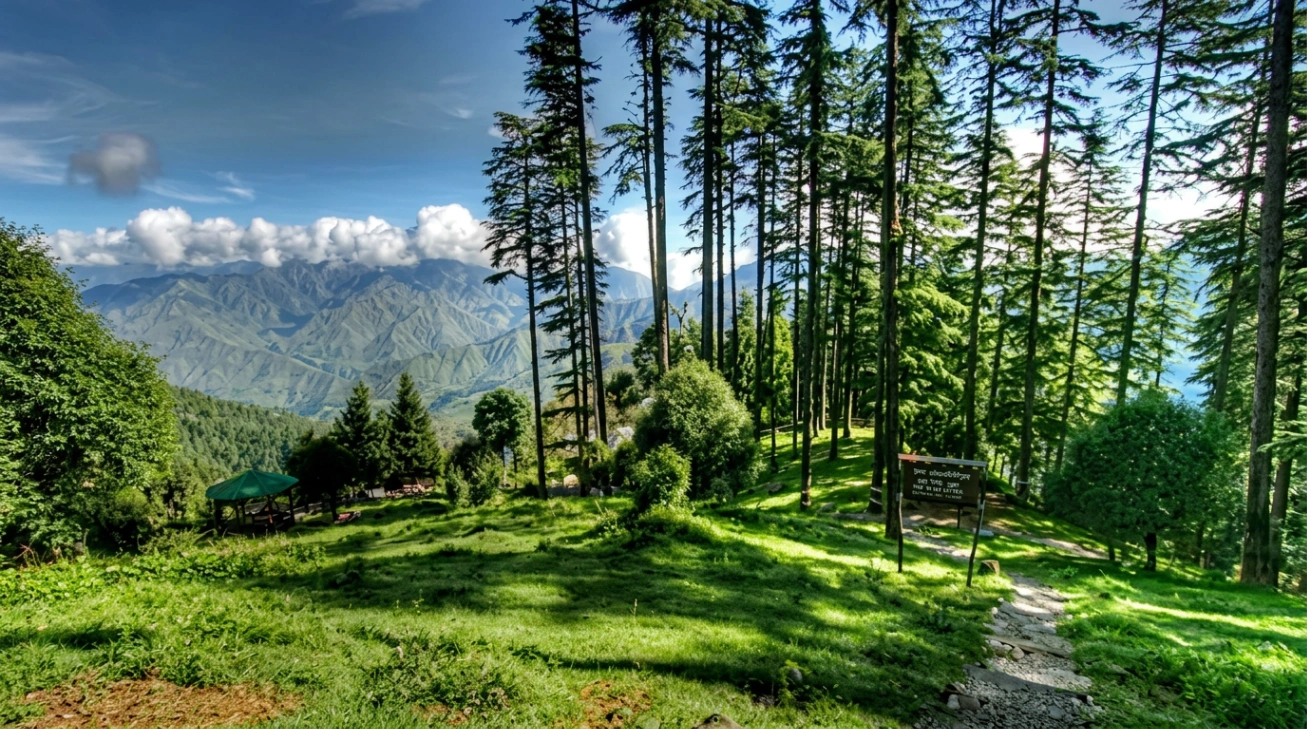
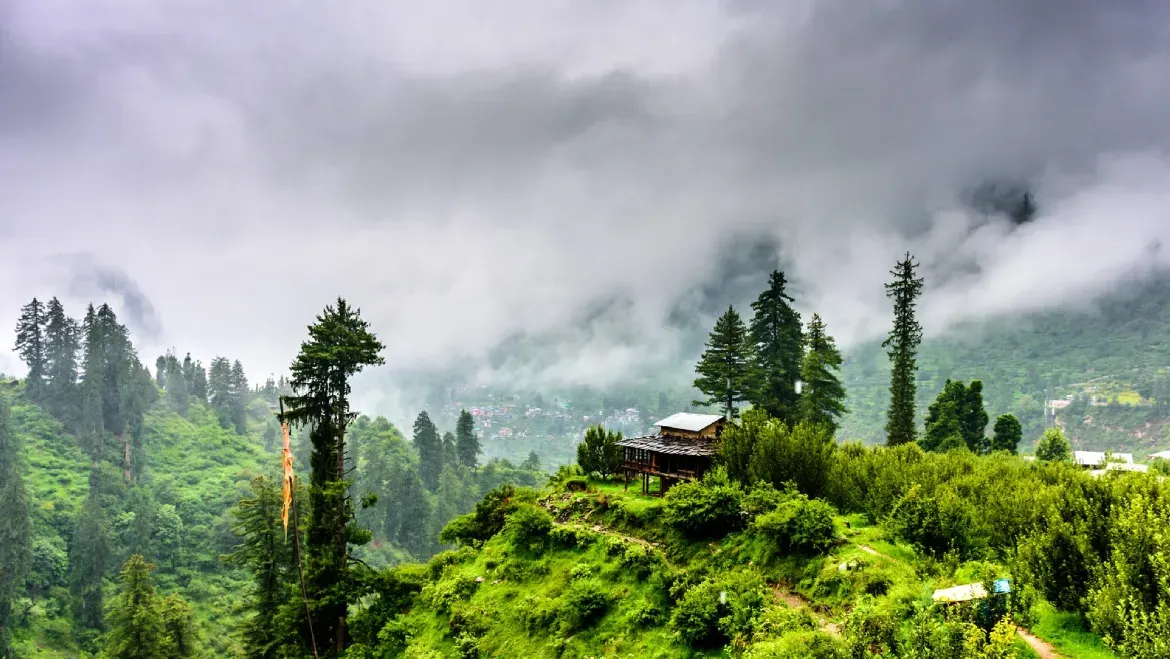
Moving further along the ridge toward Dhanaulti and Kanatal, the landscape becomes more vertical, the forests deeper. The Chir Pines give way to the sturdier Blue Pines and Oaks. The roadside dhabas here offer a more rustic welcome. There is a deep, grounding comfort in a meal of Mandua ki Roti—a dark, earthy finger millet bread—served with a bowl of Gahat ki Dal. These are the flavors of the soil, designed for a life lived at an angle.
The stays here are often glass-fronted sanctuaries that provide a front-row seat to the Himalayan glow. At sunset, the peaks of Nanda Devi and Trishul catch the last light, turning a brilliant, incandescent gold while the valleys below fall into violet shadow.
The Secret Cedar: The Rugged Ascent of Chakrata
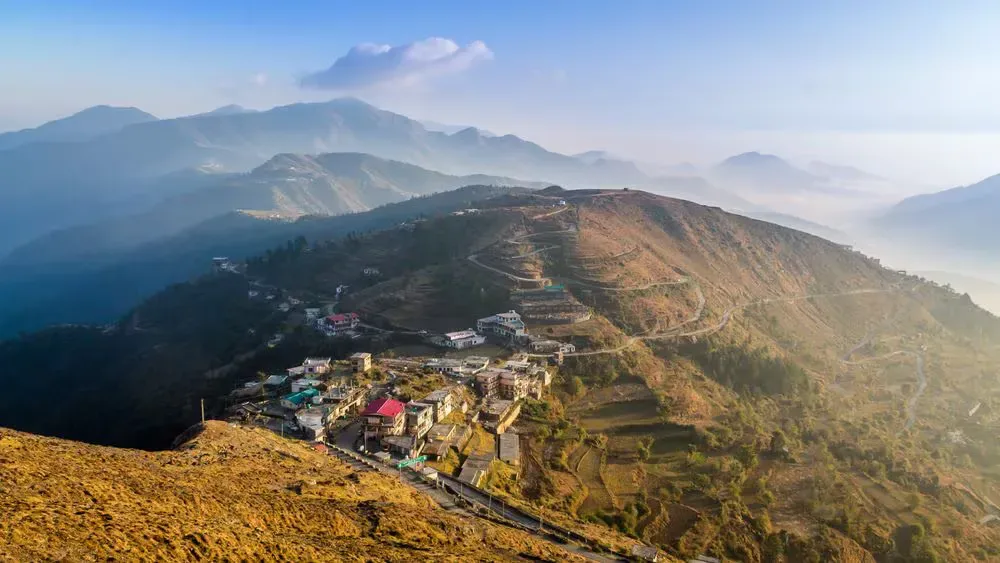
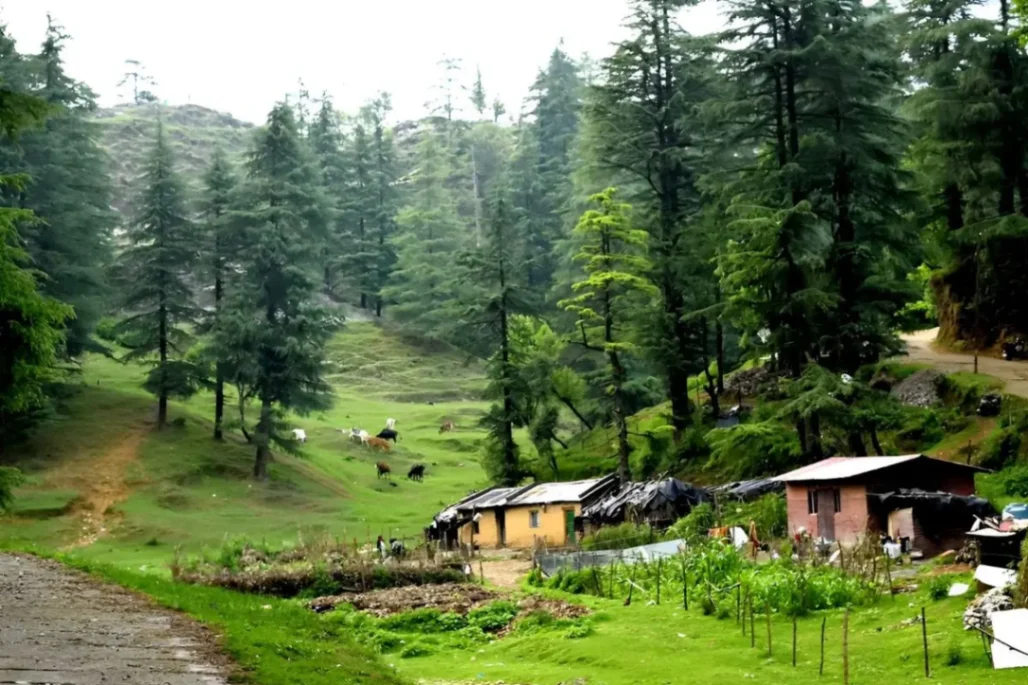
To enter the hills via Chakrata is to choose the path of the hermit. The climb from the Yamuna valley is steep and untamed, winding through limestone outcrops that feel ancient and unyielding. This is the realm of the Deodar, the Himalayan Cedar. In the high-altitude meadows of Deoban, the 'Forest of Gods,' the trees are giants that blot out the sun, creating a forest floor made of a thick, silent carpet of needles.
There is a visceral power to this region. At Tiger Falls, the water drops over three hundred feet against the cliffs, creating a freezing mist that coats the surrounding ferns in a permanent dew. Here, the hospitality is unpretentious—old British-era forest rest houses with thick stone walls and creaking floorboards, where the only light at night comes from the soft flicker of a kerosene lamp and the orange embers of a bukhari wood-stove.
The Kumaon Doorway: Lakes and Orchards
In the east, the entry through Kathgodam offers a different sensory palette. Within moments of leaving the railway station, the humid heat of the plains is replaced by the resinous breath of the mountains. The road leads steeply toward the Lake District, where Nainital sits like an emerald eye reflecting the surrounding peaks.
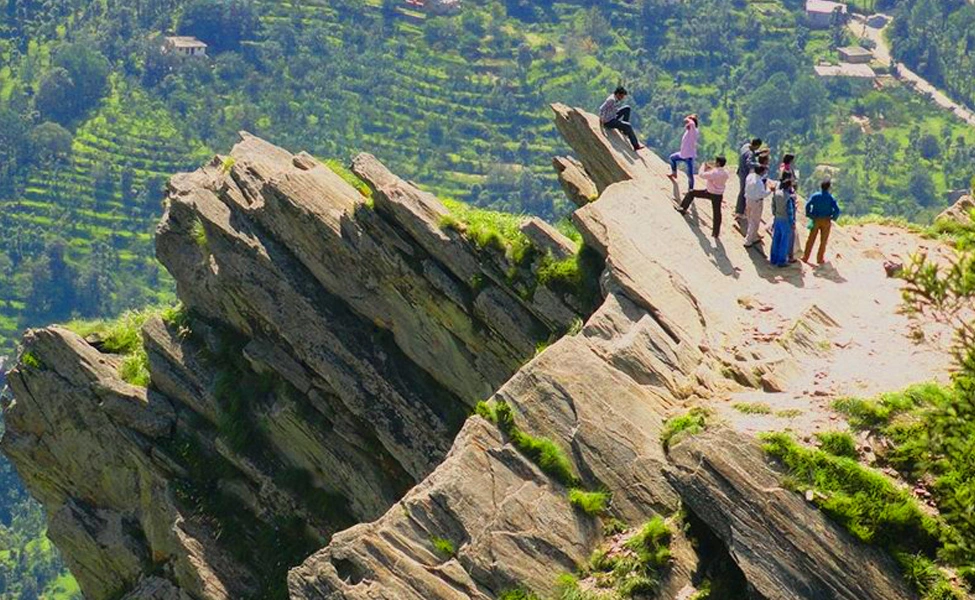
Further on, the air in Mukteshwar transitions from the scent of pine to the delicate, floral perfume of ripening stone fruits.
Mukteshwar is best explored slowly, over a couple of days.
Depending on the season, the slopes are heavy with apricot, plum, and peach orchards. Almora, the cultural heart of Kumaon, offers a walk through history. The narrow markets, paved with flagstones, are lined with heritage houses featuring Likhai—intricately carved wooden doors that smell of aging cider and mountain rain.
The Pahadi Table: A Map of Flavors
To eat in these hills is to understand the landscape. The food is patient, slow-cooked in iron pots until it reaches a deep, smoky complexity. One might find Bhatt ki Churkani, a jet-black soybean gravy that tastes of the earth itself, or the iconic Bal Mithai of Almora—a roasted khoya fudge encrusted with tiny white sugar beads that crunches delightfully before melting into a chocolatey richness. And then there is Singori, a sweet wrapped in a fresh Maalu leaf, which imparts a herbal, camphor-like aroma that lingers long after the meal is over.
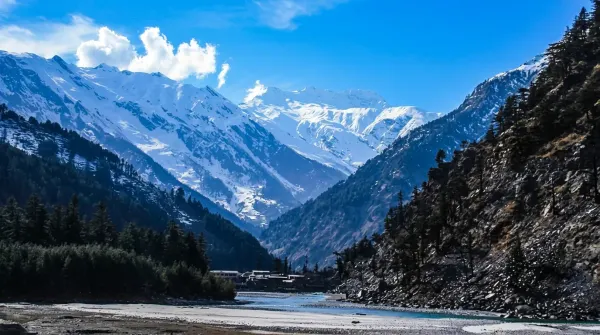
The hills of Uttarakhand do not demand to be understood; they invite one to simply be present. Whether it is the creak of a pine branch in the wind, the taste of a mountain lentil, or the sight of the first snowy peak emerging from the clouds, the experience is one of homecoming. The threshold has been crossed. The hills wait above.
If You’re Heading This Way
- A Quiet Stay in Landour →
- Exploring Chakrata & Deoban →
- Where to Stay in Mukteshwar →
Uttarakhand Series
- Part I — The First Pine — Where the Hills Begin
- Part II — Where the Rivers Roar — The High Valleys
- Part III — The Quiet Ridges — Meadows, Forests, and Open Skies